
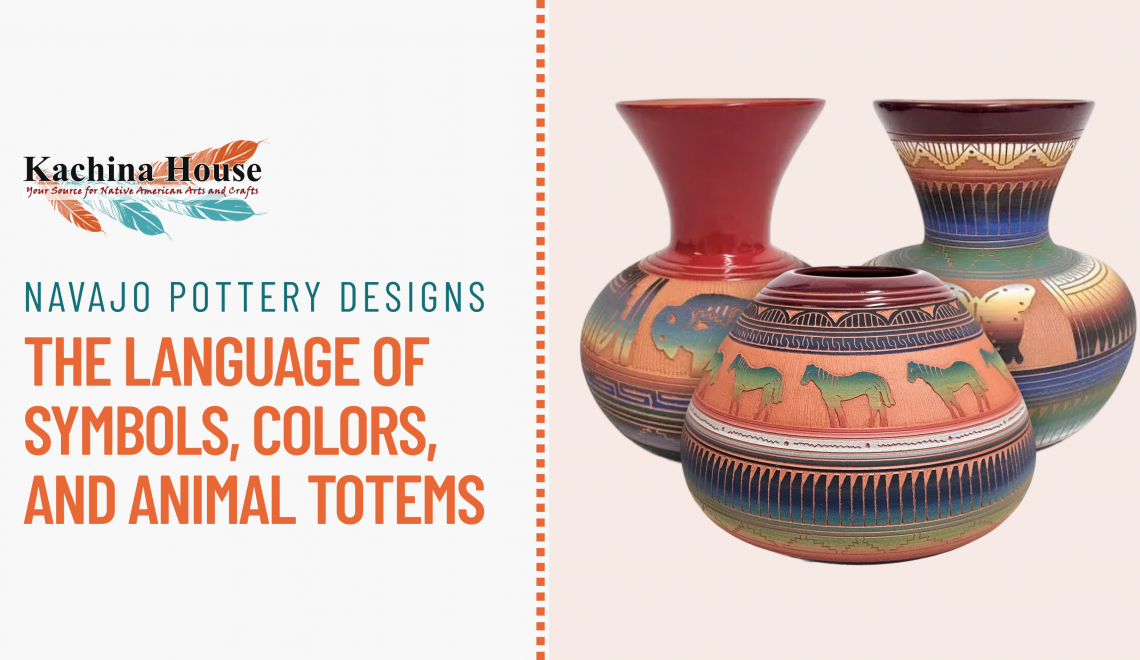
When you hold a piece of Navajo pottery, you’re not just holding clay. You’re experiencing communication that stretches back centuries, spoken in symbols, animals, and sacred colors rather than words.
Every etched line on the surface is there for a reason. Every animal figure is a prayer. That’s what makes Navajo pottery unlike almost anything else you can collect.
A Craft With Deep Roots
Navajo pottery has a quieter history than most people expect. As a semi-nomadic tribe, the Navajo (Diné) relied on baskets and woven goods for everyday use. Pottery came later, learned in part from the Puebloans of the Rio Grande. For a while, it nearly disappeared when railroad trading posts made manufactured cookware more accessible.
The tradition survived. Potters like Rose Williams kept the knowledge alive, passing techniques to daughters and neighbors. Today, Navajo pottery is a living art. It is thick-walled and rich with meaning.
Modern Navajo potters often work with red terracotta or white gypsum clay. The clay is shaped, painted, and then decorated using a technique called Sgraffito. The artist carves designs through the paint layer while the clay is still soft. Once fired in a kiln, those carved lines reveal either the warm red earth beneath or the bright white of gypsum. The result is stunning.
What Are the 4 Navajo Colors?
Color is not only decorative in Navajo tradition. It is directional. The four sacred colors of the Navajo correspond to the four cardinal directions and hold ceremonial significance.
Black represents the North and the darkness that brings depth and introspection. Blue or turquoise represents the South, associated with peace and the sky. White represents the East and the light of new beginnings. Yellow represents the West and the warmth of evening and harvest.
These colors appear across Navajo art, from sand paintings to weavings to pottery. When you see them on a ceramic vessel, know that they are not chosen casually.
What Is the Sacred Symbol of the Navajo Tribe?
The most recognized sacred symbol is the whirling logs, misappropriated and reversed to become a political symbol . In Navajo tradition, this design represents the logs set in motion by the gods in creation stories. It appears in sand paintings, blankets, and pottery, carrying prayers of blessing and renewal.
Beyond that, Navajo pottery is rich with other sacred symbols. You’ll find the stepped-cloud design, which represents the heavens and the paths the gods travel. Lightning bolts carry the power of storms and transformation. Mountains, rain, whirlwinds, bear paws, corn, and prayer feathers all carry their own specific meanings. Each symbol, as Kachina House describes it, is a prayer to the Great Spirit.
Navajo Symbols and Animal Totems on Pottery
Animal totems are among the most powerful images you’ll find on Navajo pottery. They are not decorations. They are a presence.
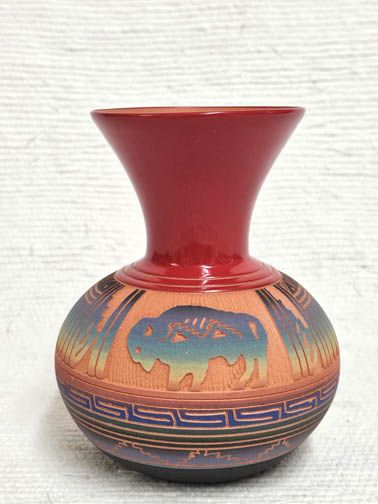
The Buffalo
The buffalo is a symbol of protection and provision for the Navajo people. Its strong, steady form embodies a protective spirit. Historically, the buffalo offered meat, hide, and bone, giving life to entire communities. When you see a buffalo etched into red clay, you are looking at gratitude made visible. Our Navajo Red Clay Pot with Buffalo honors that spirit beautifully.
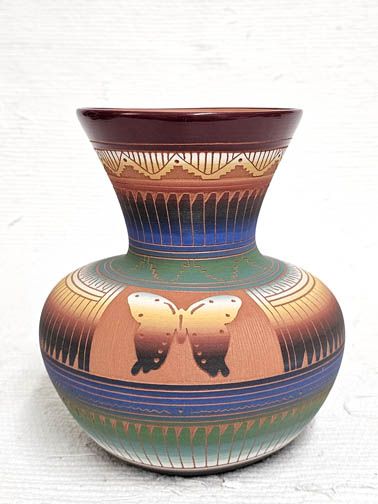
The Butterfly
The butterfly represents beauty and the joy of life. For the Navajo, it is also a reminder to protect the natural world. A butterfly depends on a healthy environment to survive, and so do we. Seeing one etched into a pot is an invitation to slow down and appreciate life’s small wonders. Our Navajo Red Clay Pot with Butterfly captures that gentle, joyful energy.
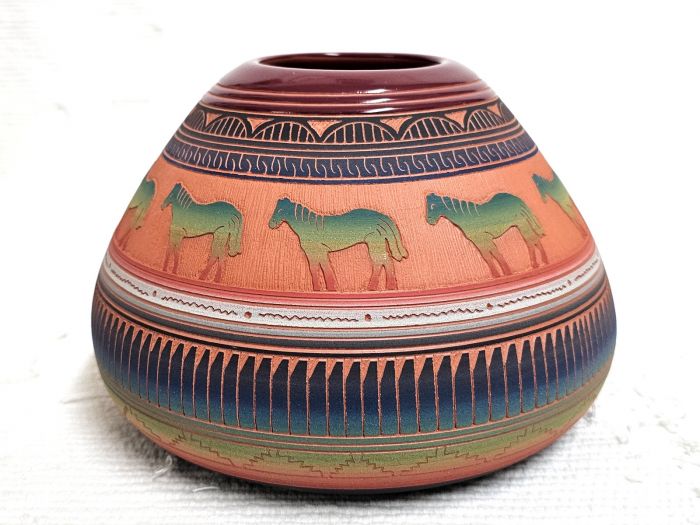
The Horse
Few animals carry more meaning for the Navajo than the horse. The Diné themselves have said it plainly: without horses, the economy, history, and character of the Navajo Nation would be profoundly different. Horses appear in Navajo creation stories and ceremony songs. They represent freedom, endurance, and a bond with the land that goes back generations. Our Navajo Red Clay Pot with Horses carries that legacy in every etched line.
Each animal was chosen intentionally by the artist. It reflects their prayer, their community’s values, and a story worth keeping alive.
A Note on How These Pots Are Made
Navajo ceramic pottery starts as clay poured into a mold. This gives the potter more time to focus on what really matters, the etching and painting. Artists use a technique called Sgraffito, carving precise designs through paint into soft clay.
Once fired in a kiln, the carved lines reveal either warm red earth or bright white gypsum beneath. No two pieces look exactly the same. The detail work is painstaking and beautiful.
One practical note: traditional Navajo pottery is not glazed on the inside. It is made to be displayed and admired, not used to hold liquid. Treat it like the work of art it truly is.
Every Piece Holds a Prayer
Navajo pottery is a living record of a people’s relationship with the earth, the sky, and the spirit world. The navajo symbols and animal totems etched into each vessel are not remnants of the past. They are active, intentional expressions of culture, faith, and identity.
When you bring one home, you bring that intention with you.
Explore our curated collection of Navajo pottery at Kachina House. Each piece has been selected with care, and every purchase directly supports the Indigenous artists who keep this tradition alive. Take your time. Find the piece that speaks to you.